Digital transformation is the process of integrating digital technology into every part of a business — infrastructure, operations, customer experience, and decision-making — to fundamentally change how the organization delivers value and competes. For UAE enterprises, this isn’t optional anymore. It’s the operating model that national policy, customer expectations, and competitive pressure are all pushing toward simultaneously.
If you’re leading transformation at an enterprise level, you already know the challenge isn’t convincing anyone that change is needed — it’s execution. Legacy systems are deeply embedded, departments have competing priorities, and the cost of getting it wrong (downtime, data loss, wasted budget) is high. This guide breaks down what digital transformation services actually involve, the framework we use with UAE enterprises, and how to avoid the pitfalls that derail most transformation initiatives.
Why Digital Transformation Is Urgent for UAE Enterprises
The pressure isn’t coming from trend — it’s coming from policy and market structure. The UAE Digital Economy Strategy has a clear national target: grow the digital economy’s share of non-oil GDP from 12% to 20% by 2030, backed by investment in cloud infrastructure, AI adoption, and data governance frameworks across public and private sectors. The UAE’s Telecommunications and Digital Government Regulatory Authority (TDRA) manages this agenda through its National Digital Government Strategy, which sets a world-leading benchmark for digital service delivery and increasingly shapes what enterprises need to match to remain competitive for government contracts and partnerships (U.AE — Digital Transformation Strategies).
For enterprises specifically, this creates a dual mandate: modernize internal operations to stay efficient, and modernize customer-facing systems to stay competitive. Organizations that lag on both risk losing ground not just to competitors, but to shifting regulatory and procurement expectations.
What Digital Transformation Actually Includes
Digital transformation is often used as a vague buzzword, so it’s worth being specific. At the enterprise level, it typically spans four connected layers:
- Infrastructure modernization — moving from legacy, siloed systems to scalable, cloud-enabled architecture
- Process digitization — replacing manual, paper-based, or spreadsheet-driven workflows with automated systems
- Custom software & integration — building or connecting systems so data flows across departments instead of sitting in silos
- Customer & employee experience — digital portals, self-service tools, and marketing technology that improve how people interact with the organization
A transformation initiative that only touches one of these layers rarely delivers the ROI leadership expects. Real transformation requires all four moving together, which is why enterprises benefit from a partner who can handle infrastructure, development, and customer-facing digital work under one roof — rather than coordinating multiple disconnected vendors.
Our Digital Transformation Framework
At Qasr Alsahl It, we structure enterprise transformation engagements around a five-stage framework built from 11+ years of delivering IT infrastructure, custom development, and digital marketing projects across UAE industries:
1. Assess — Digital Maturity Audit
Before recommending anything, we map your current infrastructure, software stack, workflows, and data flows to identify where the biggest inefficiencies and risks actually are — not where they’re assumed to be.
2. Strategize — Roadmap & Prioritization
Transformation should be sequenced, not attempted all at once. We build a phased roadmap that prioritizes high-impact, lower-risk changes first, so leadership sees measurable results early and budget approval for later phases becomes easier to secure.
3. Modernize Infrastructure
This typically starts with IT infrastructure solutions and cloud migration — the foundation everything else depends on. Without stable, scalable infrastructure, custom software and automation initiatives inherit the same reliability problems as the systems they replace.
4. Build & Integrate
This is where custom software development and portal solutions come in — connecting departments, automating workflows, and replacing generic tools with systems built around how your enterprise actually operates. See our detailed breakdown of custom portal development for businesses for a closer look at this stage.
5. Optimize & Extend
Once core systems are stable, transformation extends outward — to customer experience, digital marketing infrastructure, and contact centre modernization — turning internal efficiency gains into external competitive advantage.
Common Barriers to Enterprise Digital Transformation
Even well-funded transformation initiatives fail for predictable reasons:
- Trying to modernize everything simultaneously — this overwhelms teams and increases risk without a phased rollout
- Underinvesting in infrastructure before building on top of it — new software built on unstable infrastructure inherits its problems
- Treating transformation as an IT-only project — the biggest ROI usually comes from process and culture change alongside the technology
- Ignoring compliance and data governance early — retrofitting compliance after systems are built is far more expensive than designing for it upfront
- No clear ownership or accountability — transformation initiatives without an executive sponsor tend to stall at the first budget cycle
Measuring Transformation ROI
Enterprises that succeed with digital transformation typically track a mix of operational and financial indicators rather than relying on a single metric: reduction in manual processing time, infrastructure uptime improvements, cost savings from decommissioned legacy systems, faster time-to-market for new digital services, and improved customer satisfaction or retention metrics tied to digital touchpoints. Building these benchmarks into the roadmap from day one — rather than retrofitting measurement later — makes it much easier to justify continued investment to stakeholders.
Why Enterprises Choose a Combined Infrastructure + Development + Marketing Partner
Many enterprises start transformation with separate vendors for infrastructure, software development, and digital marketing — and end up spending significant time and budget just getting those vendors to work together. Since 2013, Qasr Alsahlit has taken a different approach: combining infrastructure, custom development, and marketing expertise under a single accountable team, with a “zero compromises on quality” philosophy applied consistently across every layer of a transformation engagement. That means fewer integration gaps, faster execution, and one point of accountability instead of five.
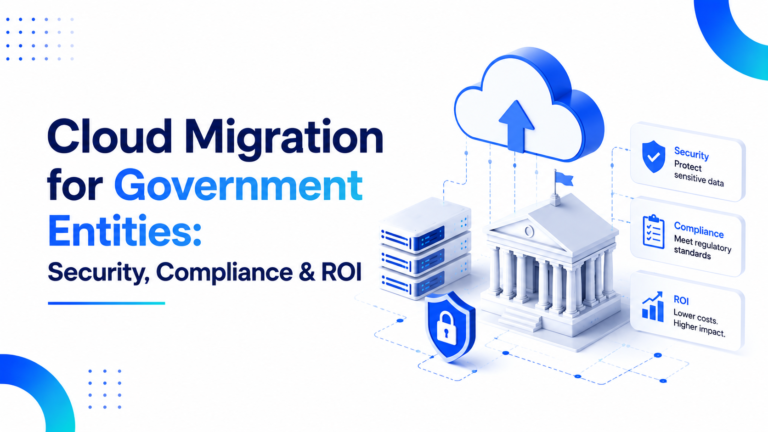
This approach is particularly valuable for enterprises operating across multiple emirates or serving both private and public sector clients, where infrastructure decisions (like cloud migration for government-adjacent entities) need to align with broader digital strategy rather than being handled in isolation.
Frequently Asked Questions
What is digital transformation? Digital transformation is the process of integrating digital technology into every area of a business — infrastructure, operations, customer experience, and decision-making — to fundamentally change how the organization delivers value. It goes beyond adopting new tools; it changes how work gets done.
How long does digital transformation take for an enterprise? Most enterprise transformation initiatives run in phases over 12–24 months rather than as a single project. Core infrastructure modernization typically comes first (3–6 months), followed by custom software and integration work, then customer-facing optimization — sequenced to deliver measurable results at each stage.
What’s the difference between digital transformation and IT modernization? IT modernization typically refers to upgrading infrastructure and systems. Digital transformation is broader — it includes IT modernization but also covers process redesign, customer experience, and organizational change enabled by that technology.
How much does digital transformation consulting cost for UAE enterprises? Costs vary significantly based on scope, current infrastructure maturity, and how many business functions are involved. A phased approach — starting with an infrastructure and process audit — allows enterprises to see cost estimates for each stage before committing to the full roadmap.
Start With a Digital Maturity Assessment
Before committing budget to a full transformation program, it’s worth understanding exactly where your organization stands today. Let’s assess your current infrastructure and workflows in a free 30-minute consultation — no commitments, just honest recommendations on where transformation will deliver the most value first. Contact our team to schedule your assessment.